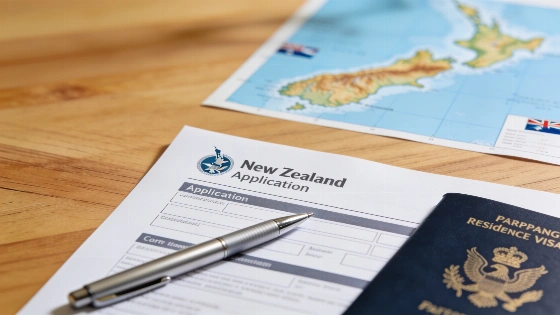
Retirees aiming for a long-term stay in New Zealand face a maze of immigration rules and steep financial barriers. While some countries offer direct retirement visas, New Zealand focuses on skilled workers, major investors, or family reunification. This leaves retirees with only a few demanding options. Immigration New Zealand divides its visa system into visitor, parent, partnership, work, and residence categories, but does not provide a general retirement visa.
Looking ahead to 2026, the Temporary Retirement Visitor Visa remains the closest fit for retirees. Applicants must be at least 66 and show they have serious financial backing: at least NZD $750,000 invested in New Zealand for two years, NZD $500,000 in maintenance funds, and a yearly income of at least NZD $60,000. The visa fee starts at NZD $7,891. This visa allows a stay of up to two years and can be renewed, but it does not lead to residence or public healthcare. Private health and travel insurance is required for the entire stay. Standard Visitor Visas are also available, letting people stay up to six or nine months depending on their situation, but these do not open a path to long-term residence or retirement settlement. Immigration New Zealand spells out these differences on its official visa portal.
Family-Based Pathways and Residence Options
Many retirees hope to join adult children already living in New Zealand. The Parent Boost Visitor Visa, which reopened in September 2025, allows extended family visits of up to five years at a time, with a lifetime cap of ten years. This visa does not offer a route to residence. Applicants must meet one of several financial criteria, such as personal income, personal funds, or their sponsor's income, and must keep comprehensive insurance. The application fee starts at NZD $3,100.
For those aiming for residence, the Parent Retirement Resident Visa provides a direct but costly route. It requires at least NZD $1,000,000 invested for four years, NZD $500,000 in settlement funds, and an annual income of NZD $60,000. Applicants also need sponsorship from an adult child who is a New Zealand citizen or resident. The fee starts at NZD $12,850. Successful applicants get residence immediately and can apply for a Permanent Resident Visa after four years.
The Parent Resident Visa is another way to gain residence, relying on the sponsor's income instead of the applicant's assets. From 30 April 2026, a single sponsor must earn at least NZD $109,200 per year, or NZD $145,600 for two joint sponsors. These thresholds rise for additional parents. Only 2,500 visas are issued each year through a ballot, and the wait can be long. The application fee starts at NZD $5,810. Immigration New Zealand confirms that the Parent Resident Visa remains available, but applicants must first be selected in the parent-category process and then receive an invitation to apply. On 19 November 2026, Immigration New Zealand announced the November parent-category draw had finished and invitations had gone out. The agency notes that an invitation does not guarantee approval; applicants must still meet all visa requirements during assessment. This creates a two-step process—selection, then a full visa review—rather than automatic residence. More details appear in the Parent category November 2026 draw announcement.
Other Visa Categories and Key Restrictions
Beyond the parent categories, the Active Investor Plus Visa is open to high-net-worth applicants of any age, requiring NZD $5,000,000 or more in investment. The Skilled Migrant Category Resident Visa is capped at applicants aged 55 or younger, so most retirees do not qualify. Those with a New Zealand citizen or resident partner can look at the Partner of a New Zealander Resident Visa, which has no upper age limit and is based on the relationship, not financial investment.
Healthcare and Superannuation for Older Migrants
Access to New Zealand's public healthcare depends on visa status. Holders of residence-class visas, including Parent Resident and Parent Retirement Resident Visas, qualify for publicly funded health services. In contrast, Temporary Retirement Visitor Visa and Parent Boost Visitor Visa holders must use private insurance, as they cannot access public healthcare. This is especially important for retirees with pre-existing health conditions, who should get insurance quotes before applying.
Getting New Zealand Superannuation (NZ Super) is not automatic for new residents. Applicants must be at least 65, hold a residence-class visa, and have lived in New Zealand for a set number of years since age 20, including at least five years since turning 50. The total years required rise by date of birth, reaching up to 20 years for those born on or after 1 July 1977. Some time spent in countries with a Social Security Agreement with New Zealand, such as the United Kingdom, Australia, or Canada, may count toward this requirement. For those transferring a UK pension, the four-year tax-free transfer window starts from the date of becoming a New Zealand tax resident.
Comparing Visa Options and Practical Considerations
Retirement visa options differ widely in cost, eligibility, and long-term outlook. The Temporary Retirement Visitor Visa fits those wanting longer stays without a path to residence, while the Parent Boost Visitor Visa is for family visits, not settlement. The Parent Retirement Resident Visa and Parent Resident Visa offer residence, but each comes with major financial or sponsorship barriers and, for the latter, a capped annual ballot. The Parent Resident Visa stands apart from ordinary visitor, partnership, work, and other residence routes. Family-based retirement planning depends on the applicant’s relationship to a qualifying New Zealand-based family member and on the parent-category process, not just age.
Living costs in New Zealand, especially in Auckland and Wellington, have climbed in recent years. Prospective retirees should consider not only visa fees and investment requirements but also ongoing expenses, healthcare, and the odds of qualifying for NZ Super. For more on partner visa arrangements, see our earlier breakdown.
Anyone planning retirement in New Zealand should check all requirements with Immigration New Zealand and Work and Income before making decisions, as rules and thresholds can change. Immigration New Zealand updates its requirements through formal amendment circulars, such as Amendment Circular No. 2026-12, which changed temporary-entry instructions from 1 June 2026, and Amendment Circular No. 2026-38, which made further changes to residence and temporary-entry instructions from 8 March 2027. This article outlines the main routes and their practical effects for 2026.