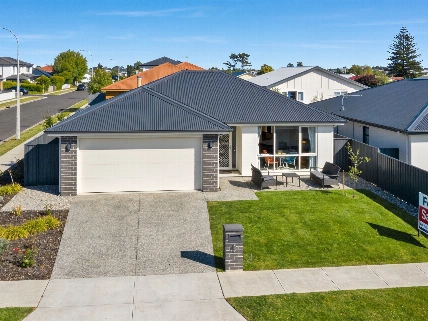
First home buyers in New Zealand now see more ways to buy property with smaller deposits, as banks push low equity mortgages that require as little as 5 percent upfront. This shift follows changes made in December 2025 to the Reserve Bank of New Zealand’s loan-to-value ratio (LVR) framework, which lets banks allocate a larger share of new lending to borrowers with smaller deposits. The Reserve Bank calls these settings suitable for the current risk environment and points out that the framework broadens access to low-deposit borrowing. Still, banks must assess each borrower's repayment ability and overall credit risk. In practice, the lower entry barrier comes with a sharp rise in ongoing repayments for those who take these loans. Regulatory limits on high-LVR lending are measured over a rolling period, usually three months for large banks. Most banks keep lower internal limits as a compliance buffer, so the regulatory maximum is not what any individual bank must or will lend. Getting a 5 percent deposit mortgage depends on more than the headline deposit. Lender allocation, credit policy, income checks, and servicing tests all play a role. The Reserve Bank’s latest review in July 2026 left these settings unchanged, stating that housing-related risks did not justify changing the restrictions. Reserve Bank of New Zealand Financial Stability Report November 2026
Latest figures from the Real Estate Institute of New Zealand show the national lower quartile selling price in October was $577,000. This price has held steady for four months, moving only slightly between $577,000 and $580,000. Mortgage interest rates, which had been rising, dipped a little in October. The average two-year fixed rate from major banks dropped to 5.35 percent from 5.42 percent in September. This change cut weekly mortgage payments by about $8 for buyers with a 20 percent deposit, or $10 for those with a 10 percent deposit, on a lower-quartile priced home.
How deposit size affects loan costs
For a $577,000 home, a 20 percent deposit means saving $115,400. Interest.co.nz estimates a typical couple would need nearly five years to save this if they put aside 20 percent of their after-tax pay each week into an interest-bearing account. Dropping the deposit to 10 percent halves the savings needed to $57,700 and the estimated saving time to 2.4 years. Lowering the deposit further to 5 percent cuts the upfront requirement to $28,850, with the saving period shrinking to 1.2 years.
In Auckland, where the lower quartile price is $763,000, the gap widens. A 20 percent deposit requires $152,600, while a 5 percent deposit brings that down to $38,150. The time needed to save for a 5 percent deposit in Auckland is estimated at 1.56 years, compared to 6.27 years for a 20 percent deposit.
Repayment impact and eligibility
Smaller deposits make it easier to enter the market, but they also mean taking on a bigger mortgage. For a lower quartile-priced home, a 20 percent deposit results in a $461,000 mortgage. With a 5 percent deposit, the loan jumps to $548,150. In Auckland, the mortgage rises from $610,000 with a 20 percent deposit to $724,850 with a 5 percent deposit.
Banks usually charge a premium for low equity loans to reflect higher risk. Interest.co.nz estimates weekly repayments on a $577,000 home with a 20 percent deposit and a 30-year term could be around $594. For the same property with a 5 percent deposit, repayments could reach $803 per week—about 35 percent higher, or an extra $209 each week. Repayment structures and the premium for low equity loans can differ between banks. The Reserve Bank reports that new mortgage demand remains subdued and is driven mainly by first-home buyers and borrowers refinancing between lenders. Mortgage lending standards have stayed broadly stable, and banks have raised their servicing-test interest rates in line with market rates. Even though regulatory capacity exists for more high-LVR lending, actual borrowing demand and bank affordability tests continue to limit uptake. Loan-to-value and debt-to-income restrictions are not materially constraining lending under current conditions because borrowers generally appear cautious.
Low equity mortgages are not new, and about half of all mortgages issued to first home buyers now involve deposits of less than 20 percent. Still, higher repayments mean these loans are generally only available to buyers with above-average incomes who can handle the increased financial commitment. For many typical first home buyers, especially in higher-priced regions like Auckland, repayments on a 5 percent deposit mortgage remain out of reach. The Reserve Bank also notes that household income loss and unemployment remain key drivers of financial stress, and that weak housing-market activity can make late-stage mortgage arrears persist because distressed borrowers may find it harder to sell. Hardship applications declined during 2025 as lower interest rates eased debt-servicing pressure. The share of mortgages in negative equity remains low overall, though it is higher in Auckland and Wellington. First-home buyers may benefit from lower market pricing, but still face bank-specific serviceability tests, deposit requirements, and the higher leverage that comes with a small down payment.
For more details on mortgage affordability and recent changes in the New Zealand housing market, see our previous coverage.