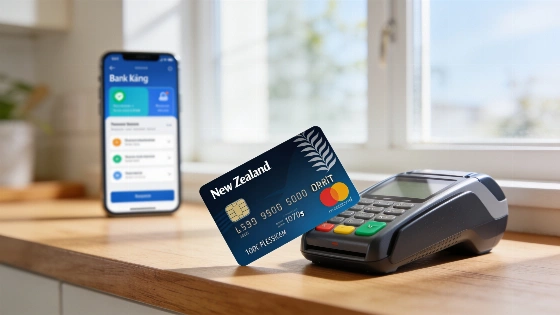
People in New Zealand who want to avoid monthly bank account fees and get more from their everyday banking now have choices from both established banks and newer providers. Most major banks—ANZ, ASB, BNZ, Kiwibank, Westpac, Heartland, TSB and SBS—offer at least one fee free account. However, the real benefits and costs depend on how each person uses their account and which features matter most. The Reserve Bank of New Zealand splits household deposits into three categories: transaction accounts for daily banking, savings accounts, and term deposits. Fee free transaction accounts and interest-earning savings or term deposits are separate products, so comparisons need to reflect that. For more detail on these categories, see the Reserve Bank's official deposit classification.
For many households, overdraft costs are the biggest ongoing expense after mortgage or credit card interest. Overdraft interest rates differ widely between banks, so comparing terms is worthwhile if you use this facility often. The Reserve Bank points out that overdrafts are not all the same: some are secured against housing, like personal housing revolving credit, while others are unsecured and have different pricing. When looking at overdraft costs, check the product type, whether it is secured or unsecured, the advertised rate, the effective rate, and any extra fees. Most banks include free New Zealand ATM transactions, internet banking and electronic statements with their fee free accounts. Extra services such as paper statements or in-branch cheque deposits usually come with additional charges. Anyone still paying a monthly account fee may be able to switch to a no fee option with their current bank or move to another provider with little effort.
Switching Banks and Managing Payments
The New Zealand Bankers Association says changing banks is a simple process that can be finished in five working days. The new bank usually manages the transfer of recurring payments, including direct debits and automatic payments, using a single form. This setup aims to keep things running smoothly so salary payments and regular bills continue without a hitch. Customers should check that all payment details, including employer payroll information, are updated to avoid missed transactions. The Reserve Bank of New Zealand has highlighted easier switching between providers as a key factor in boosting competition in the banking sector. Advances in digital services and innovation have improved customer experiences. Lower switching barriers can create more market movement and push banks to improve services and work more efficiently. For more, see the Reserve Bank's Summary: The Future of Banking Study.
Comparing Account Features and Alternatives
Fee free accounts are now common at most banks, but interest rates on credit balances are still low or negligible for everyday transaction accounts. The Reserve Bank's deposit statistics show that transaction accounts are mainly for payments and not set up to earn much interest, while savings and term deposit products are designed for returns. For those wanting to earn a return on their balance, Heartland Bank's YouChoose account stands out by offering both fee free banking and interest on savings. Customers who need overdraft flexibility may also find YouChoose competitive, as it is noted for its overdraft terms. For international transactions and travel, Wise offers an electronic money account with a debit card, low foreign currency fees and the ability to hold and convert multiple currencies at the real exchange rate. Wise is not a bank and does not support direct debits, overdrafts or interest on deposits. The Wise debit card can be ordered for a one off NZ$14 fee, with no annual charges, and works with Apple Pay and Google Pay for contactless payments.
Another option is Savvy, which operates as an investment fund managed by Booster rather than a bank account. Savvy offers a 2.65% per annum return, reviewed monthly, with instant access to funds and a Mastercard debit card for daily spending. Payments to and from New Zealand bank accounts are supported, but direct debits are not available. Savvy is set up as a PIE (Portfolio Investment Entity), so returns are taxed at the investor's PIR, capped at 28%. The account is managed entirely through a mobile app, with no minimum balance required and all funds earning interest.
Practical Considerations for Everyday Banking
Main banks' apps, customer support and security features are generally similar, but some charge annual debit card fees. Customers who want to track spending or manage budgets may find value in using a budgeting app that links with their bank account. For those who travel or make frequent international purchases, the Wise debit card helps avoid high foreign currency fees and poor exchange rates. Anyone relying on physical cash should note ATM withdrawal limits and fees after the first NZ$350 per month. The Reserve Bank's cash-use data shows that some New Zealanders have reported fees when withdrawing cash over the counter or using an ATM, and that branch deposit fees can also apply. ATMs have replaced some branch services, but often do not accept deposits or coins and may charge users. Available cash sites can vary: some offer only withdrawals, some serve only one bank’s customers, and some charge fees. These factors mean that even a fee free account may still involve costs or inconvenience when customers need branch cash deposits, coin handling or other non-electronic services. The Reserve Bank has proposed a minimum cash-services standard for banks, stating that cash services are linked to the basic obligation of converting deposits into cash and should be free to customers, but this is still a consultation proposal and not a final regulatory decision. More details are in the Reserve Bank's Keeping Cash Local public consultation paper.
For a wider look at how New Zealand's banking sector compares internationally, including competition and lending practices, see the earlier breakdown published by Simple New Zealand.
Related Guides and Further Information
Readers interested in specific account types or features can check dedicated guides on debit card comparisons, joint accounts, overdraft costs, student accounts, credit cards and travel money cards. Switching banks is set up to be fast and secure, and most New Zealanders can access fee free banking unless they need specialised services. Checking the latest terms, fees and interest rates directly with providers is recommended before making a decision. For a full comparison of current account options, see MoneyHub's guide to the best bank accounts.