Interruptions to fertiliser shipments through the Strait of Hormuz ripple out to distant markets. New Zealand farmers feel the impact through higher costs and uncertainty about getting the nutrients their crops and pasture need. The Strait of Hormuz acts as a vital artery in the global food supply chain, with about one-third of all seaborne fertiliser trade moving through this narrow route. Urea, a major nitrogen fertiliser, makes up roughly 20% of the fertiliser cargo passing through the strait. Diammonium phosphate accounts for 67%, monoammonium phosphate 9%, and other fertilisers 4%. Around 30% of the world's traded urea moves through the Strait of Hormuz, which leaves supply chains exposed to any disruption in this region. The Gulf region supplies about 34% of global urea trade and 23% of ammonia exports, along with nearly half of sulphur exports, all crucial for fertiliser production. UN Trade and Development and FAO-cited reporting have tied shipping disruptions in the strait to broader risks for food production and agricultural yields worldwide.
Yara International, a Norwegian fertiliser company with operations in 60 countries and sales into 140 markets, has weathered a series of shocks over the last six years. Chief executive Svein Tore Holsether points to a period shaped by the Covid pandemic, Russia's invasion of Ukraine, and now shipping problems in the Middle East. Each event has forced the company to rethink sourcing and production, pushing it to build more flexibility into its operations. Yara's public statements put the Hormuz risk in the context of global shocks, stressing the need for diversified sourcing and operational flexibility to limit exposure to energy-price swings, transport delays, and regional supply bottlenecks.
Why fertiliser matters for food security
Fertiliser is essential for commercial agriculture. Holsether estimates that about half of the world's food production relies directly on nutrients applied by farmers. Without fertiliser, yields fall and food becomes less affordable. While energy sources can sometimes be swapped, plants' nutritional needs stay the same. This makes efficient fertiliser use a key issue for both food security and farm profitability. Holsether frames fertiliser access as a food-security concern, saying "around half of the food produced in the world is a direct result of fertilizer or nutrition being applied in the field."
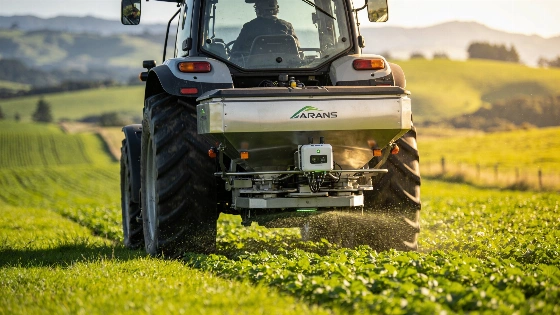
Yara has responded by spreading out its supply chains and investing in technology to help farmers get more from every dollar spent on nutrients. One example is the company's tractor-mounted N-Sensor, which measures crop needs in real time and adjusts fertiliser application. This approach can cut waste, improve crop consistency, and help farmers manage costs in a volatile market.
Financial pressures and resilience on New Zealand farms
New Zealand's export-focused farmers face high stakes. They have little say over international input prices or global shipping routes, but their profits depend on managing these risks. Holsether notes that while technology and better agronomy can help, farmers will only keep investing in new systems if they see a return. The financial and emotional strain on farming families is real, especially when disruptions threaten their ability to cover production costs or pass the business to the next generation.
Recent events show how quickly global shocks can hit local food prices and availability. After recent disruptions in the Strait of Hormuz, global fertiliser prices jumped by about 20% between February and May, according to Food and Agriculture Organization data. In May, fertiliser imports into the United States from Middle Eastern ports affected by the disruption dropped to zero, and overall US crop-nutrient imports fell by 44% year-on-year for that month. Australia, which serves as a regional comparator for New Zealand, gets about 60% of its urea imports from the Middle East and faced shipment delays in the Persian Gulf while waiting for safe passage through the strait. These cases show how shipping interruptions can reduce physical availability, raise replacement costs, and force buyers to look to more distant suppliers. For New Zealand, the level of exposure depends on importer inventories, supplier diversification, shipping alternatives, and the share of urea and other nutrients sourced from affected regions. The situation is similar to the rise in cyber security incidents and financial losses reported earlier, where international events create risks for New Zealand businesses and households.
Technology, soil health and the future of farming
Yara is also putting money into biostimulants to help crops handle drought and heat stress, with fieldwork in places like southern Spain and Kenya showing how healthy soil boosts resilience. Holsether describes farmers who improved soil health and managed to keep crops during extreme weather, while others lost entire harvests. Healthy soil can improve nutrition, water retention, and resistance to climate extremes.
Artificial intelligence and satellite imagery are making specialist agronomic advice more accessible, so even smaller farms can benefit from targeted recommendations. Holsether gives the example of a melon grower in China who used improved nutrition to increase crop size and quality, reaching the market ahead of competitors and getting a better price. The lesson for New Zealand: profitability and resilience are closely linked, and both depend on adapting to changing global conditions.
Holsether argues that food security should rank higher in international policy discussions. For New Zealand, keeping farmers profitable is more than a business issue—it underpins the country's food system and the affordability of food for all residents.