Costs for daily life in New Zealand shift widely based on location, household size and whether you rent or own. In Auckland, families who want a comfortable lifestyle and the ability to save usually need a combined gross income of at least $120,000. Singles in regional cities can often manage on $65,000 to $75,000 for a similar standard. The Household Economic Survey (HES) and annual national accounts are the main official tools for tracking household income and spending, each offering a different angle on how New Zealanders handle their finances and what they can afford.
Singles renting in Auckland find $70,000 per year covers the basics, but financial advisers point to $90,000 as a safer target, especially with median rents at $700–$850 per week for a three-bedroom house or $500–$650 for a central one-bedroom apartment. Stats NZ’s business price index treats rental, hiring and real estate services as a separate category, underlining how much housing costs shape budgets. After paying $550 per week in rent, a single Aucklander on $70,000 has about $2,247 per month left for everything else—food, transport, utilities and savings. Childcare for families can add $250–$400 per week per child, even with the 20 free hours for children aged three and over. Public transport costs are capped at $50 per week with an AT HOP card. Inflation chips away at these salary benchmarks, with the Consumers Price Index showing annual inflation at 3.7%.
Regional and City Comparisons
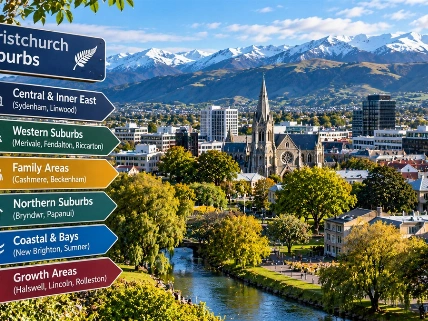
Wellington’s living costs remain high, but rents are usually lower than in Auckland. A single renter in Wellington needs about $65,000 for adequacy, with $80,000 offering more comfort. For a family of four, $135,000 is considered enough, while $170,000 is the comfort line. Christchurch is the most affordable major city, with singles renting comfortably on $72,000 and families of four managing on $140,000. In regional centres like Hamilton, Tauranga and Dunedin, singles can live well on $58,000–$65,000, and families on $95,000–$115,000. Invercargill and Whanganui have the lowest thresholds, with $52,000–$55,000 for singles and $88,000–$90,000 for families.
Owning a home changes the picture. Mortgage repayments are significant but eventually end, unlike rent. For example, an $80,000 salary goes further in Christchurch or Invercargill if you own your home, with mortgage payments of about $630 per week on a $600,000 Christchurch property or $470 per week on a $450,000 Invercargill home (assuming a 20% deposit and 5.50% interest over 30 years). Stats NZ points out that comparing renters and homeowners is tricky, since imputed rent for owner-occupied homes is included in national accounts but left out of the HES. This means owner-occupiers get an implicit housing benefit in national-accounts calculations that doesn’t show up as cash income in the survey. Interest, rates, insurance, maintenance, deposits and housing equity all play a role in the real cost of owning a home.
Defining a Good Salary
In New Zealand, a good salary covers essentials, allows for savings, supports KiwiSaver contributions (minimum 3.5% of gross income from 1 April 2026), builds an emergency fund and leaves some room for discretionary spending. The minimum wage from 1 April 2026 is set at $23.95 per hour, or $49,816 per year for full-time work. The living wage, effective 1 September 2026, will be $29.90 per hour, or $62,192 per year. These numbers fall below comfort benchmarks in most cities, especially for families. Stats NZ’s linked employer–employee data (LEED) gives official figures on mean and median earnings for jobs across the country, helping to compare proposed salary thresholds with actual labour-market earnings. A salary like $70,000 can’t be treated as a universal comfort measure without clarifying if it’s an individual’s gross earnings, household income, or combined income.
Anyone considering a move or job change should know that buying a median-priced Auckland home (around $900,000–$1,000,000) requires about $150,000–$170,000 in household income, based on a debt-to-income ratio of 6x for an $800,000 loan with a $200,000 deposit. Most first-home buyers in Auckland will need two incomes to meet these requirements. Stats NZ’s national accounts data for the year ended March 2025 show that household disposable income, consumption expenditure and saving all matter when judging if a salary leaves room for savings after essentials. Revisions to these figures, such as the $1.1 billion downward revision to household saving in March 2025, show that affordability calculations shift with updated data and should be seen as scenario estimates, not fixed national benchmarks.
Frequently Asked Questions
Is $60,000 a good salary in New Zealand? For singles in regional cities, $60,000 is close to the median and generally adequate, but in Auckland, it’s tight after rent. For families, $60,000 as the sole income is challenging anywhere. Is $100,000 a good salary? This puts an individual in the top 19% of earners and is comfortable for singles in any city, but for a family of four in Auckland, it is only adequate. Saving on a New Zealand salary can be difficult, especially in Auckland and Wellington, where housing costs often take up 40–50% of take-home pay. KiwiSaver ensures some retirement savings, but building an emergency fund or deposit for a home requires careful budgeting. The financial position of households depends on more than wages, including property income, transfers, consumption and housing costs, and all salary figures should be considered in the context of current prices and inflation rates.
For those on work visas, changing jobs or employers in New Zealand involves specific requirements, as outlined in this guide.