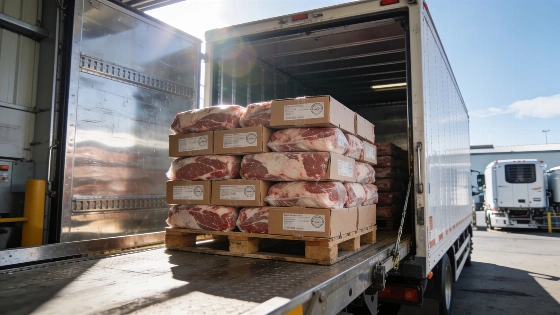
New Zealand's lamb sector is on alert as the United States considers raising tariffs on imported lamb, a step that could shift both prices and export volumes. The current effective tariff is 13.5%. American sheep farmers have pushed for more penalties, claiming imports from New Zealand and Australia put their domestic industry at risk. On 13 July 2026, the U.S. International Trade Commission (USITC) opened a global safeguard investigation into imported lamb at the request of the U.S. Trade Representative. The investigation is reviewing whether lamb imports are a substantial cause of serious injury, or a threat of serious injury, to U.S. sheep producers under Section 201 of the Trade Act of 1974.
Lamb remains a niche protein in the US, with American sheep flocks in the low millions. New Zealand's flock is much larger at 24 million. Most New Zealand lamb shipped to the US is frozen and comes in smaller racks than American or Australian lamb, so it competes less directly with local products. Over the last five years, New Zealand's export volumes to the US have held steady, which suggests these imports supplement rather than displace American production. New Zealand exporters and sector groups, including the Meat Industry Association and Beef + Lamb New Zealand, maintain that their lamb complements US production by filling supply gaps during seasonal shortages and meeting varied customer needs. Most New Zealand lamb sold in the US is frozen and differs in product format from much American and Australian lamb, including smaller racks.
Tariff decision process and industry response
The International Trade Commission recently split on whether American lamb producers have suffered injury from imports. On 13 November 2026, the six-member USITC divided 3–3 on the injury question. This result moves the case to the remedy phase under US safeguard procedures but does not itself trigger tariffs, quotas, or other restrictions. A remedy hearing was set for 1 December 2026, and the USITC is scheduled to send recommendations to President Donald Trump by 11 January 2027. Until the President decides, no new lamb-specific tariff is in place, and any commercial impact remains a risk rather than a certainty.
Three commissioners who found serious injury pointed to Australian lamb imports as a substantial cause of serious injury or threat of serious injury to the US industry. New Zealand was not identified as an individual substantial cause, though it remains part of the broader investigation. Australia supplies a much larger share of US imported lamb than New Zealand, with Australian shipments to the US about three times larger than New Zealand's, and Australia making up about two-thirds of America's imported lamb. This distinction matters, as any product-specific remedy could hit Australia harder than New Zealand.
The Meat Industry Association (MIA) and Beef + Lamb NZ have been active in Washington, presenting evidence that New Zealand lamb supports the US market by providing a steady supply, especially during seasonal shortages. American businesses that rely on imported lamb also argued that these imports help meet varied customer needs and support high prices for both domestic and imported products. R-CALF USA, a US sheep-producer group, has called for a four-year tariff on imported lamb, including shipments from Australia and New Zealand, aiming to rebuild the US sheep flock through temporary import protection. This stance differs from exporters and import-dependent US businesses, which argue that imported lamb expands supply and serves market segments not fully covered by domestic production.
President Trump is expected to make the final call on possible relief measures for US sheep farmers, including raising tariffs or targeting Australian lamb, which enters the US in much higher volumes than New Zealand product. The outcome could affect the price of New Zealand lamb in the US, possibly pushing it above what consumers or hospitality businesses are willing to pay. Still, the current tariff has not notably reduced demand for what is already a premium-priced protein.
Market impact and exporter strategies
Exporters are cautious about sharing market-specific details, but some note that the US pays on average $2 per kilo more for lamb racks than the next best alternative, even though racks are only a small part of the carcass. If tariffs rise sharply, exporters may need to shift product to other markets, though demand is unlikely to vanish entirely. The effect on farmgate schedules is expected to be limited unless there is a wider downturn in global red meat demand.
Recent trade data shows that lamb exports to the US from August to October 2026 were 27% lower than the same period in 2025, but this drop happened alongside a 62% increase in sales to the UK, showing that several factors shape export flows. This decline in US shipments was not conclusively tied to tariffs, as changes in destination-market demand, such as increased UK sales, may have influenced export flows. According to Nick Beeby, CEO of the MIA, "exporters will make their own commercial decisions on what markets they supply once the outcome of the safeguard investigation is announced. Those decisions will be influenced by a range of factors and may vary between exporters from the same country."
New Zealand exporters have access to over 100 markets and experience adapting to changing conditions. While the US is the top destination for some lamb cuts, other markets exist for products that may be redirected if US demand drops. For context on how international trade developments can affect New Zealand's food and agriculture sectors, see this earlier breakdown.
Industry representatives say that a steady supply of New Zealand lamb helps support the US industry by filling gaps during seasonal shortages. The MIA also notes that global meat markets are interconnected, so changes in one market can influence others. Exporters are preparing to adjust their strategies depending on the final US decision, but the broader risk remains a global economic downturn that could reduce red meat demand and prices worldwide.
USDA Economic Research Service data reported that total US sheep and goat inventories on 1 January 2024 declined 1.9% from the previous year. The same USDA outlook reported record US meat imports of 3.727 billion pounds in 2023, an annual increase of nearly 10%. Imports from Australia rose 66%, while imports from New Zealand increased 33% during the period covered by the report. These figures provide the quantitative backdrop for US producer concerns about import growth and shrinking domestic livestock numbers, though the cited report covers aggregate meat imports and should not be treated as a lamb-only total.
For further background on the US safeguard investigation and its implications for New Zealand lamb exports, see this analysis.