A used car advertised for NZ$12,000 can cost considerably more to get on the road and keep there. It leaves out inspections, immediate repairs and ongoing bills. In New Zealand, the useful comparison is between the full cost of two cars over the same period, not just their asking prices.
Check the car before paying
Start with the current warrant of fitness (WoF), service records and registration details. NZ Transport Agency Waka Kotahi says a buyer can insist on a WoF less than one month old, although different arrangements can be agreed. A WoF checks road safety at the inspection date. It is not a mechanical warranty and does not assess the long-term condition of the engine or gearbox.
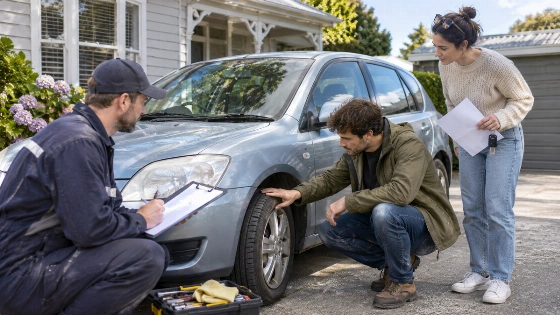
An independent pre-purchase inspection is a separate expense worth allowing for. Ask the mechanic to look for fluid leaks and evidence of previous damage, then assess upcoming maintenance. Worn tyres or overdue servicing can make a lower-priced car dearer within months. Consumer Protection recommends an independent mechanic even when a dealer has arranged its own inspection. For an electric car, battery health and the supplied charging equipment deserve specialist attention.
Check the vehicle identification number against its paperwork and look for inconsistent odometer records. A search of the Personal Property Securities Register can reveal a registered security interest. A lender may have a claim over a vehicle sold with outstanding finance. Check the police stolen-vehicle database as well. History reports and inspections cost money, but the seller's verbal assurances cannot replace them.
WoF, rego and road user charges
A roadworthy car still needs a current vehicle licence, commonly called rego. NZTA's published fees for a 12-month licence starting after 1 July 2026 are NZ$181.45 for a private petrol passenger vehicle and NZ$248.83 for a private diesel or electric passenger vehicle. These figures include GST and the applicable ACC levy. The fee for a particular vehicle depends on its classification and licensing period. WoF inspections are charged separately, with any repairs adding to the cost.
Road user charges (RUC) are another cost for most diesel vehicles and battery-electric cars. NZTA lists NZ$76 per 1,000km for the usual light-vehicle category up to 3,500kg, before purchase administration fees. At 10,000km, that is NZ$760 in distance charges. Plug-in petrol hybrids in the relevant category pay NZ$38 per 1,000km; ordinary petrol hybrids do not pay RUC. See NZTA's RUC guidance. Check the remaining licensed distance on a RUC vehicle before the handover, because overdue charges can become a problem for the next registered person.
What the first year of driving costs
Insurance quotes can vary with the driver, car model and where it is kept. Compare premiums alongside the excess and what each policy actually covers. Third-party cover does not generally pay to repair the policyholder's own car after an at-fault crash. Get a quote for the exact vehicle before buying rather than relying on the premium paid for a previous car.
Fuel or charging costs depend on distance travelled and the vehicle's actual efficiency. Add routine servicing and likely replacement parts to the budget. Tyres, brakes and batteries can require spending well before the next major service. Check the cost of parts for imported models. One repair can consume the money reserved for running costs.
Finance changes the calculation again. Compare the total amount repayable, not the advertised weekly instalment. Interest, establishment fees and the repayment term can make a lower monthly payment expensive overall. Read the conditions for early repayment and any optional warranty or add-on before signing. A warranty sold by a dealer is not a substitute for legal consumer rights.
Dealer or private seller: the difference matters
A motor vehicle trader must provide an accurate Consumer Information Notice (CIN) for a used vehicle. It identifies the vehicle and its history, with the cash price and any disclosed security interest. Eligible dealer purchases have protection under the Consumer Guarantees Act, which takes account of the car's age and price when assessing acceptable quality. The government's dealer purchasing guidance explains these requirements.
Private purchases generally do not have the same Consumer Guarantees Act protection. Before transferring money, keep the advertisement and written sale terms, confirm the seller's identity and record the odometer reading. Both parties must notify NZTA immediately of the change in registered person; the online process is free. That registration record identifies who is responsible for licensing and related obligations, but is not itself proof of legal ownership.