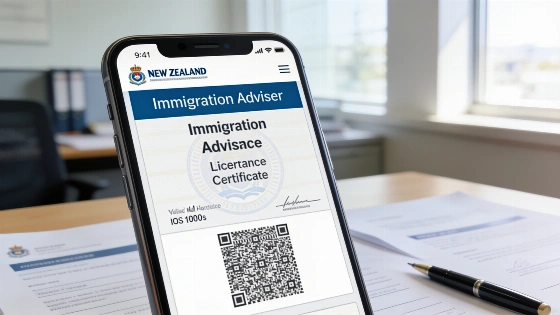
New Zealand visa applicants must follow strict legal requirements about who can give immigration advice. The Immigration Advisers Licensing Act 2007 states that only licensed individuals or those exempt under the Act may provide such advice. The Immigration Advisers Authority (IAA) regulates licensing and keeps the public register. This law applies to advisers based both in New Zealand and overseas, including places like India or China. The licensing system aims to protect migrants from poor or dishonest advice and to support New Zealand’s reputation as a migration destination. Read the Immigration Advisers Licensing Act 2007.
The IAA defines immigration advice as using knowledge or experience to advise, assist, direct, or represent someone on a New Zealand immigration matter. This covers suggesting which visa someone might qualify for, helping with form questions, preparing covering letters, or acting as a representative. The law applies whether or not the adviser is paid. Advice is regulated when it is tailored to an individual’s situation or used to recommend a specific action. The IAA’s rules cover advice on visas, permits, immigration status, sponsorship, appeals, and related matters. Companies cannot hold adviser licences; only individuals can, and the licensed person must be named. See the IAA's definition of immigration advice.
What is not considered immigration advice
Certain activities do not fall under the legal definition. The IAA notes that giving publicly available information, referring someone to the register of licensed advisers, clerical work, translation, interpreting, and settlement services like help with housing or schools are not immigration advice. General information, translation, interpreting, clerical help, and settlement support are outside the definition if they do not involve individualised recommendations. Someone may type information provided by an applicant or translate their answers without becoming an adviser. Information becomes advice when it is tailored to a person’s situation, such as evaluating an applicant’s case, recommending a visa, answering eligibility questions, drafting arguments, or representing the applicant. This distinction helps prevent businesses from disguising tailored visa strategy as administrative or educational support. More on what is not immigration advice.
Types of licensed immigration advisers
Licensed advisers must meet competency standards and follow a code of conduct. The IAA lists three licence types. A full licence lets the adviser handle all immigration matters. A provisional licence holder can advise but must be supervised by a full licence holder. A limited licence restricts the adviser to the matters listed on the licence. Only individuals can be licensed, not companies, and each licence lasts one year. A limited licence allows advice only on the matters specified, so seeing someone listed as licensed does not mean they can handle every visa or immigration issue. Provisional advisers must work under a fully licensed adviser’s supervision. Details on licence types.
How to check an adviser's licence
The IAA offers two ways to check an adviser’s licence. You can search the adviser’s name on the official online register at iaa.govt.nz or ask for their digital licence certificate and scan its QR code to see their public profile. The IAA issues only digital certificates. A licence is not valid if it has expired, been surrendered, refused, suspended, or cancelled. The IAA’s public register is the main tool for checking if someone is currently licensed and what their licence status is. The register lists advisers by name and shows licence details, so clients can confirm if a person is licensed before relying on advice. A licence is personal to the adviser and does not cover every employee of a consultancy or migration business. The register should be checked when advice is sought, as licensing status can change, expire, or have conditions. Check the public register of licensed immigration advisers.
Who is exempt from licensing requirements
Some people can give immigration advice without an IAA licence. These include New Zealand lawyers with a current practising certificate from the New Zealand Law Society and their employees, employees of foreign governments acting officially, and people giving only unpaid help in specific situations. Education agents and travel agents are not automatically exempt because of their industry. If an activity goes beyond clerical support or general information and becomes individualised advice, licensing may be required. People outside New Zealand who advise only on student visa applications (not work or residence pathways for the student or family), foreign diplomats and consular staff, and current New Zealand Members of Parliament and their staff may also be exempt. Family members may give one-off, unpaid help, but this does not extend to friends. The same rules apply to advice given on social media and online forums. Exempt people must still follow the Act’s relevant provisions. See who can give immigration advice.
Citizens Advice Bureaux and Community Law Centres may provide general information and help with forms. Only a lawyer can represent someone in a court appeal or judicial review.
Obligations of licensed advisers
Licensed advisers must give a written agreement before starting work, outlining services and fees. They must charge fair and reasonable fees, issue detailed invoices, inform clients when an application is lodged, and declare any conflicts of interest, including commissions. The IAA does not set a price list for services. Fees can differ based on the complexity and urgency of the application and the number of people involved. The IAA suggests consulting several advisers before choosing one. Licensed advisers can also assess options for people in New Zealand unlawfully. The system requires advisers to meet competence and professional conduct standards and gives clients a formal complaints process if they are unhappy with the service.
Risks of using unlicensed advisers
Immigration New Zealand will not accept applications submitted by unlicensed people acting illegally and will return the application. The IAA warns against anyone who refuses to put their name on a visa application, claims to have personal contacts at Immigration New Zealand, or asks for a signature on a blank application form. Giving immigration advice without a licence or exemption is an offence under the Immigration Advisers Licensing Act 2007, with penalties of up to NZ$100,000, up to seven years in prison, or both, even if no fee is charged. The legal risk is not limited to advisers who charge a fee: the statutory definition and offence provisions can apply where advice is provided without payment unless a specific exemption covers the conduct. Anyone can report an unlicensed adviser to the IAA, and making a complaint will not affect the person's immigration status. Complaints about suspected unlicensed advice can be referred to the IAA, while visa applicants should also inform Immigration New Zealand if misleading or fraudulent assistance has affected an application. Enforcement aims to deter unauthorised operators and reduce risks such as false documentation, inappropriate visa strategies, and exploitation of migrant clients.
Applying for a visa without an adviser
Using an immigration adviser is optional. Immigration New Zealand confirms that people can apply for their own visa and provides forms and guides online. Applicants are responsible for the accuracy and completeness of information in their applications, even if an adviser or representative prepares forms or supporting material. The practical safeguard is to check the adviser’s name and licence status before signing documents, paying fees, or sharing sensitive identity information.
This article uses information from the Immigration Advisers Authority as of 22 November 2026. For advice on your individual situation, contact a licensed immigration adviser. For further reading, see the original source at Settlewise NZ.