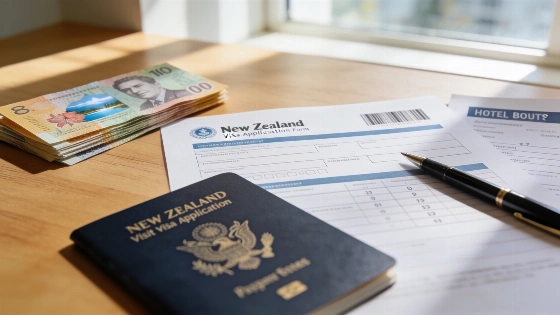
Applicants for a New Zealand visitor visa must prove to Immigration New Zealand that they have enough money to support themselves during their stay. The agency sets the standard at NZ$1,000 for each month in the country, or NZ$400 per month if accommodation is already paid. These amounts appear in the Immigration New Zealand Operational Manual, section V2.20, and apply to most visitor visa applicants. Immigration New Zealand handles visitor visa applications, and the Visitor Visa is a main visa category. Travelers from countries without visa waivers need to apply for a Visitor Visa before arrival. Approved visitors can usually stay for up to six or nine months, depending on the visa. Details about the Visitor Visa and eligibility are available from Immigration New Zealand.
Applicants may show evidence such as bank statements, credit card statements, bank drafts, traveller's cheques, or proof of prepaid accommodation to meet the requirement. Immigration New Zealand also accepts a statement from a sponsor or guarantor. The Operational Manual lists other forms of evidence, including cash and recognised credit or debit cards with enough available credit, as well as a letter of financial support from an employer or home government for business travellers. The list is open-ended, so other proof may be accepted. There is no set number of months of bank statements required.
Sponsorship as an alternative to funds
Applicants can use a sponsor in New Zealand instead of showing personal funds. A sponsor may be an individual who is a New Zealand citizen or holds a residence class visa with no conditions except travel conditions, or an organisation such as a registered company, incorporated society, charitable trust or government agency. The sponsor must promise in writing to cover the visitor's living costs, accommodation, and the cost of deportation or return travel. Individual sponsors face extra rules, including a requirement to normally live in New Zealand, not charge a fee, not be bankrupt, and not have certain immigration convictions or unpaid sponsorship debts. The sponsorship form must be submitted by the applicant or sponsor, and an immigration officer decides if the sponsor is acceptable. The Operational Manual states there is no appeal against this decision.
Special cases and additional requirements
Partners or dependent children of work visa holders with enough income, or of student visa holders whose scholarship covers family living costs and accommodation, do not need to provide proof of funds or sponsorship. Pregnant visitors planning to give birth in New Zealand must show at least NZ$9,000 to pay for maternity care, have a sponsor who will cover it, or prove eligibility for publicly funded maternity services.
Evidence of onward travel
Immigration New Zealand also asks for evidence of travel plans out of New Zealand. This can be a ticket to a country the applicant has the right to enter, or documents such as bank statements showing that the applicant or sponsor has enough money to buy one.
Where to find the rules
The requirements appear in the Immigration New Zealand Operational Manual, with section V2.20 covering funds or sponsorship and section E6.5 detailing acceptable sponsors. The rules may change, so applicants should check the latest version of the manual or consult a licensed immigration adviser for advice on their own situation.
This article gives general information and does not provide immigration advice. For personal guidance, readers can find a licensed adviser through the Immigration Advisers Authority website.