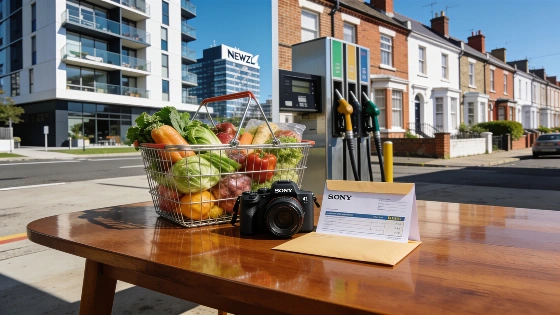
Households weighing a move between New Zealand and the UK in 2026 face a patchwork of costs that rarely line up neatly. Rent for a typical flat in Auckland or Wellington is less than half the average in London, but groceries and mobile plans in New Zealand often run higher than in the UK. The latest figures from July and August 2026 show a tangled set of pressures for anyone comparing everyday expenses across the two countries. Official data from Stats NZ reports that household living costs in New Zealand rose 3.0% in the 12 months to the September 2026 quarter, with different expense categories pushing up the national benchmark. This annual change covers more than supermarket prices, tracking the out-of-pocket costs faced by various household groups. Stats NZ news offers more detail on these trends.
Trade Me Property’s Rental Price Index puts Auckland’s median asking rent at NZD $660 a week in early 2026, or about $2,860 a month (£1,227 at the mid-July exchange rate of GBP 1 = NZD 2.33). Wellington’s median was $620 a week, or $2,687 a month (£1,153). Across New Zealand, the national median rent stood at $595 a week ($2,578 a month, £1,107). Meanwhile, the Office for National Statistics reported London’s average private rent at £2,290 to £2,294 a month in April and May 2026 (about NZD $5,336). The UK-wide average was £1,383 a month (NZD $3,222). Families moving from London will see a sharp drop in rent in New Zealand’s main cities, but those coming from less expensive UK regions may find New Zealand rents higher. Stats NZ’s Selected Price Indexes for October 2026 recorded a 0.6% annual increase in the flow measure of rental property, pointing to modest rent inflation at the national level.
Groceries, Eating Out and Everyday Expenses
Numbeo’s July 2026 data shows New Zealand grocery prices running about 4.5% higher than the UK overall, but the gap shifts by item. A dozen eggs cost NZD $10.77 in New Zealand, compared to £3.05 (NZD $7.10) in the UK. Lettuce was $3.71 in New Zealand and £0.90 (NZD $2.10) in the UK. Milk and bread prices were similar, while cheese and beef mince sometimes came in cheaper in New Zealand. Weekly grocery spending for a typical New Zealand family ranged from $200 to $280, while a UK household averaged £119 a week (NZD $277), rising to £161 (NZD $375) for families with two children, according to Confused.com’s March 2026 survey.
Stats NZ figures show that food prices in New Zealand rose 2.3% in the year ended October 2026, with grocery food up 2.1% and restaurant meals and ready-to-eat food up 3.4%. Eating out was a faster-rising category than supermarket groceries on the annual measure. For example, the average price of onions more than doubled from NZD $1.76 per kilogram in October 2025 to NZD $3.66 in October 2026, while prices for fresh eggs, cabbage, and tomatoes dropped over the same period. The monthly picture can look different from the annual trend: food prices fell 0.4% between September and October 2026, driven by a 0.9% decline in grocery food and a 1.6% drop in fruit and vegetables. These swings show that individual item prices can move sharply and may not match stable national averages. More details are in the Stats NZ October food price release.
Eating out is generally less expensive in New Zealand. An inexpensive restaurant meal cost $25.00 (£10.75) in New Zealand and $37.20 (£16.00) in the UK. A mid-range meal for two was $120.00 (£51.62) in New Zealand and $151.12 (£65.00) in the UK. Restaurant prices in New Zealand were about 22% lower than in the UK, based on Numbeo’s July 2026 comparison. Stats NZ’s annual data for October 2026 showed restaurant meals and ready-to-eat food rising 3.4% over the year, and still increasing 0.3% month on month in October, even as grocery prices fell.
Power, Petrol, Mobile and Childcare Costs
Power bills in New Zealand averaged $206 a month ($2,478 a year) in May 2026, with electricity priced at about 42 cents per kWh. The UK’s Ofgem price cap for a typical dual-fuel household was £1,633 a year from July to September 2026 (about £136 a month, NZD $317). Many New Zealand homes have less insulation than UK houses, which can affect heating costs. Stats NZ reported that electricity prices increased 9.4% and gas prices rose 11.0% in the year to October 2026, showing that household energy costs were rising much faster than grocery prices during this period.
Petrol prices in New Zealand peaked above $3.60 a litre in April 2026 before settling around $3.00 for 91 octane by August. The UK’s average was 150.5p a litre (NZD $3.45) as of 13 July 2026, according to the RAC. At current exchange rates, petrol costs are similar in both countries, with New Zealand slightly cheaper in mid-2026. Stats NZ’s October 2026 release recorded annual petrol-price growth of 33.5%, with petrol prices rising 11.9% month on month and diesel prices up 11.1% over the same period. Fuel became a significant extra cost for New Zealand households, especially outside dense urban areas where car use is more common. The October 2026 fuel price release gives more context.
Mobile plans and broadband are pricier in New Zealand. Numbeo’s July 2026 figures show mobile plans (calls plus 10GB or more of data) averaging $56.28 a month in New Zealand, compared to £13.58 (NZD $31.57) in the UK. Unlimited broadband cost $86.88 in New Zealand and £31.93 (NZD $74.24) in the UK.
Childcare costs tilt in New Zealand’s favour. The average monthly fee for private full-day preschool was $1,528.55 (about £657.47) in New Zealand, while the UK average was £1,283.68 (NZD $2,984.43). New Zealand’s 20 Hours ECE scheme provides 20 free hours a week for three to five year olds, regardless of income. England offers up to 30 funded hours for eligible children, but full-time fees before funding averaged £239 a week for under-twos in 2026.
Healthcare, Salaries and Tax
Public hospital care is free in both countries, but GP visits differ. In New Zealand, adults pay $18 to $85 per consultation depending on the practice, with under-14s often free. In the UK, GP visits are free under the NHS. Prescription charges are lower in New Zealand, with a flat $5 per item and a cap after 20 items per year. England’s NHS prescription charge is £9.90 per item for 2026/27, though most prescriptions are dispensed free due to exemptions. Scotland, Wales and Northern Ireland do not charge for prescriptions.
Median full-time earnings in New Zealand were about $64,000 a year (£27,468) in 2026, with the mean at $79,500. The UK’s median full-time salary was £37,430 (NZD $87,212). After tax and National Insurance, average net monthly take-home pay was $5,013.80 (£2,156.57) in New Zealand and £2,460.12 (NZD $5,719.52) in the UK. New Zealand’s PAYE system taxes income from the first dollar, with brackets ranging from 10.5% to 39%, plus a 1.75% ACC earner’s levy. The UK offers a £12,570 personal allowance before tax, with rates from 20% to 45% and separate National Insurance contributions.
Council tax in England averaged £2,392 a year (NZD $5,573) for Band D properties in 2026/27. Auckland Council’s average residential rates bill was $4,378 (about £1,879) for the same period. Rates vary by council, but most New Zealand households pay less than the UK average for council tax.
Comparison Table: New Zealand vs UK, 2026
All figures are in NZD first, with GBP equivalents at GBP 1 = NZD 2.33 (mid-July 2026):
- Rent, 1-2 bed flat (monthly): Auckland $2,860 (£1,227); Wellington $2,687 (£1,153); London $5,336 (£2,290); UK average $3,351 (£1,438)
- National/UK-wide median rent (monthly): NZ $2,578 (£1,107); UK $3,222 (£1,383)
- Groceries (weekly, typical household): NZ $200–$280; UK $277–$375 (£119–£161)
- Eating out, inexpensive meal: NZ $25.00 (£10.75); UK $37.20 (£16.00)
- Power/energy (monthly average): NZ $206 (£88); UK $317–$324 (£136–£139)
- Petrol, per litre: NZ $3.30–$3.60 (£1.42–£1.55); UK $3.51 (£1.51)
- Mobile plan (10GB+, calls): NZ $56.28 (£24.21); UK $31.57 (£13.58)
- Broadband (unlimited): NZ $86.88 (£37.37); UK $74.24 (£31.93)
- Childcare, private full-day (monthly): NZ $1,528.55 (£657.47); UK $2,984.43 (£1,283.68)
- GP visit, adult: NZ $18–$85; UK free (NHS)
- Prescription charge, per item: NZ $5 (capped after 20 items/year); UK £9.90 (~$23), free in Scotland/Wales/NI
- Median full-time salary (annual): NZ $64,000 (£27,468); UK $87,212 (£37,430)
- Average net monthly take-home pay: NZ $5,013.80 (£2,156.57); UK $5,719.52 (£2,460.12)
- Income tax, top marginal rate: NZ 39% (over $180,000); UK 45% (over £125,140) plus NI
- Tax-free threshold: NZ none; UK £12,570 personal allowance
- Council tax / rates, average household (annual): NZ $4,378, Auckland (£1,879); UK $5,573, England Band D average (£2,392)
Key Questions for 2026
Numbeo’s mid-2026 index placed New Zealand’s overall cost of living, including rent, about 13% below the UK’s, with purchasing power nearly equal. Rent and childcare costs are lower in New Zealand’s main cities compared to London, but mobile, broadband and some groceries are more expensive. Salaries are higher in the UK, but the difference narrows after tax and National Insurance. Council tax is generally lower in New Zealand than in the UK.
For those planning a move, the exchange rate as of late August 2026 was GBP 1 = NZD 2.29, after trading between NZD 2.28 and 2.35 during July and August. Rates change daily, so checking a live converter before making financial decisions is essential.
Official New Zealand statistics show that cost comparisons depend heavily on the period selected and the specific expense category. In the year to October 2026, food prices rose 2.3%, electricity 9.4%, gas 11.0%, and petrol 33.5%. These different rates mean that a single “cost of living” number cannot capture every household’s experience. Renters, households using gas or electricity intensively, and motorists may face different pressures from those with lower energy or transport exposure. Stats NZ’s October 2026 data also showed a mixed consumer environment: food prices fell 0.4% month on month, but petrol rose 11.9% and diesel 11.1% over the same interval. Retail electronic-card spending fell 0.7% month on month in October 2026, with core retail down 1.2% and hospitality spending down 1.6%, while fuel spending increased 4.8%. These figures support a category-by-category comparison rather than a single broad conclusion about affordability. More information can be found in the Stats NZ Selected Price Indexes and electronic card transactions release.