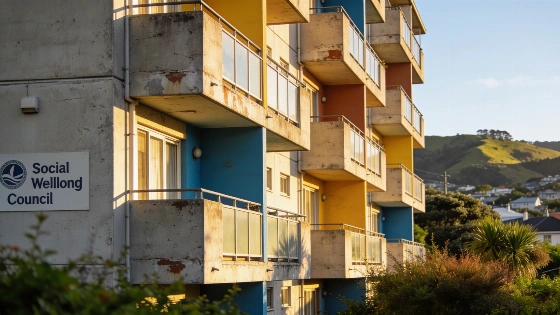
Wellington City Council’s social housing finances have come under strain as construction, maintenance and insurance costs climb. The council recently received a report showing that the assumptions behind its 2023 financial model no longer hold. Expenses have risen and government rent subsidies have fallen short of expectations. No verified numerical data for the council’s social-housing portfolio, such as the number of homes, tenant households, or the size of the operating deficit, appear in recent official sources. References to the scale of insurance increases, maintenance costs, or subsidy shortfall lack confirmed figures in available council documentation.
Central government changed its approach to the Income-Related Rent Subsidy (IRRS) in 2024, adding new investment criteria and restrictions on extra tenancies. The number of IRRS places available to Wellington has not grown as previously projected. This limits the council’s ability to offset higher costs through increased subsidies. The Ministry of Housing and Urban Development has not published any official policy instrument, Cabinet paper, or ministerial announcement confirming the details of these changes or their financial consequences for Wellington City Council.
Commitment to social housing and tenant reassurance
Mayor Andrew Little has confirmed that the council will keep the number of social housing places it provides through the Mahere Tautoru Triennium Plan 2025-2028. He stated, “Our commitment to providing homes for Wellingtonians who need them hasn’t changed. We will continue to deliver on this commitment while we work through how it is funded sustainably over the long term.”
Mayor Little also addressed tenants directly, saying, “My message to tenants is simple: there is no need to worry. Nothing about your tenancy changes today.” The council clarified that the funding challenge concerns how it supports the housing portfolio, not the performance of Te Toi Mahana, which manages day-to-day operations and tenancies. Te Toi Mahana has filled its initial IRRS allocation and finished the 2025/26 period ahead of budget. However, no independent confirmation of Te Toi Mahana’s legal structure, operating contract, tenant numbers, property count, or commencement date is available in official sources. The division of responsibilities between Wellington City Council, central government, and Te Toi Mahana, as well as the financial model behind these arrangements, has not been detailed in publicly released contracts or council resolutions.
Next steps and ongoing review
No decisions are being made this year about housing provision, ownership or service levels. Councillors are expected to receive an update in the first half of next year. The council plans to work with the incoming central government and Te Toi Mahana to explore options for a more sustainable funding model once the new government is formed. The timing of the councillor update and the specific process for reviewing the funding model have not been confirmed in official council records.
For context on how broader housing market pressures are affecting New Zealand, see our recent coverage of interest rates and house prices.
The full report is available in the council’s committee agenda.