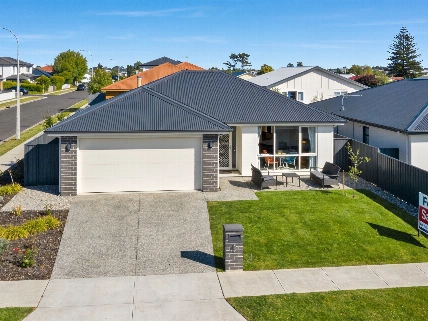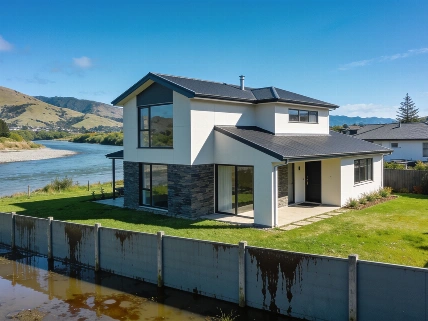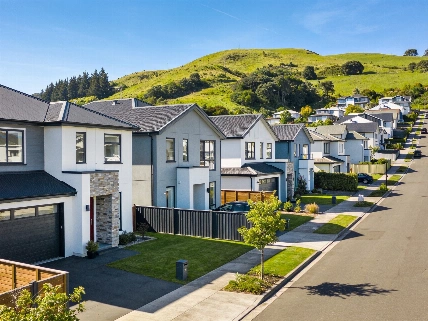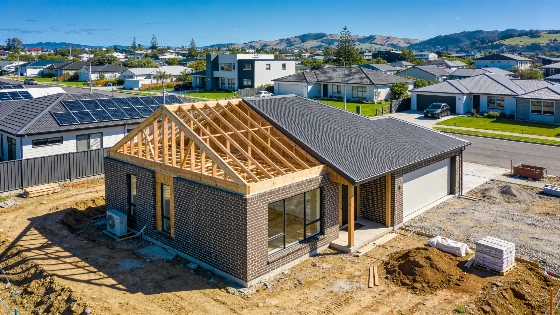
New Zealanders looking to build a standalone home now face a budget that edges toward one million dollars once land is factored in. Recent data puts the average cost to build a new 178m² standalone house at $576,008, and with an average section costing $400,000, the total climbs to $976,008. This sum leaves out extra hidden expenses that often crop up during construction. Stats NZ recorded 41,091 new homes consented in the year ended September 2026, an 18 percent rise from the previous year and the highest in four years for building approvals. These consents show regulatory sign-off for new dwellings and point to a rebound in the pipeline for new housing supply, but they do not reflect finished builds or final project costs. More details appear in the official Stats NZ release.
The Real Estate Institute of New Zealand (REINZ) reports that the national median price for an existing home in April 2026 was $775,000. Auckland's median reached $1,020,000, while Bay of Plenty, Wellington, and Canterbury posted medians of $820,000, $765,000, and $710,000. These figures show that in many places, buying an existing property costs less than building new, especially after adding up land and construction expenses.
Regional building costs and trends
Costs to build have kept rising across New Zealand, though the pace has eased since the sharp post-Covid jump in 2022. The Cordell Construction Cost Index showed a 3% increase in construction costs for 2025, just under the long-term average of 4%. Stats NZ’s October 2026 selected-price-index release noted household living costs rose 3.0 percent annually, with electricity up 9.4% and gas 11.0% over the same period. While these numbers do not directly track construction costs, they show that household running costs are climbing alongside the price of building or buying a home. Average construction costs per square metre differ by region: Otago hit $3,868 per m² in 2026, Auckland reached $3,252 per m², and Canterbury stood at $2,869 per m². The national average for 2026 is $3,226 per m².
Even with these increases, the average price of consented new builds has stayed fairly steady in most regions over the past two years. Auckland’s average new build price was $450,467 in 2026, Otago’s was $532,517, and Waikato’s reached $490,229. These numbers come from building consent applications and do not cover every cost tied to a new build. Stats NZ monitors construction activity through several measures, including dwelling consents and ready-mixed concrete statistics, which shed light on both the approval and physical building stages.
Smaller homes and changing housing types
There has been a move toward building smaller homes in recent years. The average floor area of new dwellings consented in 2026 was 140m², down 10% from 2020 and 23% from 2010. The share of standalone houses among new builds has dropped, with multi-unit housing like apartments and townhouses now making up 54% of new consents, while standalone homes account for 46%.
Still, when people do build, standalone homes remain larger than the national average. In 2026, the average standalone new build measured 178m². Regional differences remain, with Auckland’s average standalone home at 188m² and Gisborne’s at 120m².
Hidden costs and practical considerations
Beyond the headline numbers, building a new home brings extra costs that do not always show up in consent applications. Trent Simpkin of Arcline Architecture notes that the value listed in consent applications is often lower than the real build cost, since it affects consent fees. Site elevation, ground conditions, large glass areas, open-plan layouts, expensive cladding, and tough site access can all drive up the final bill. Steep or elevated sites, engineering needs, and slow construction methods are among the factors that can push costs higher. Consent statistics capture regulatory approval, not the full project budget, so they leave out costs for land, design, financing, infrastructure, development contributions, and contingencies.
Land prices play a major role in the total cost. A 2021 government report found that urban-zoned land in Auckland was valued at about $1,300 per m², Tauranga at $1,100 per m², and Wellington, Hamilton, and Queenstown between $400 and $500 per m². Using an average of $800 per m² for a 500m² section gives a typical land cost of $400,000.
Comparing building and buying
Adding land costs to the average standalone build brings the total close to $1 million. By comparison, the national median price for an existing home is much lower. A new build may mean lower maintenance and no immediate renovation, but the upfront financial outlay is much higher. Regional differences in land and construction costs mean the gap between building and buying varies widely across New Zealand.
These numbers come from national and regional data from REINZ and the Cordell Construction Cost Index, along with government land price reports. Stats NZ reported a net migration gain of 22,600 in the year ended October 2026, which matters for housing demand as more residents can put pressure on both existing homes and new supply. The latest Stats NZ results confirm that annual home consents hit a four-year high in 2026, with 41,091 new homes consented in the year ended September 2026 and 41,268 in the year ended August 2026, up 18% and 21% year-on-year. These consent figures offer key context for anyone weighing up building or buying a home in New Zealand.