People arriving in New Zealand often find the cost of daily life higher than expected, with rent, groceries, electricity and petrol frequently topping prices seen in many other countries. Cities like Auckland and Wellington do not appear on lists of the world's priciest places, yet residents say their budgets feel the strain from expensive essentials. Mercer’s Cost of Living Survey ranked Auckland and Wellington at 103rd and 123rd globally, with Wellington sharing its spot with Lyon, France. Still, living comfortably in Wellington means earning about $4,000 a month—roughly what some New York apartments cost in rent alone. Stats NZ reported a 3.7% rise in the consumer price index for the year to September 2026, and the average household’s cost of living climbed 3.0% in that time. The impact varies by category: in October 2026, electricity prices jumped 9.4% year-on-year, gas rose 11.0%, and international air transport increased 13.1%. Petrol prices shot up 38.0% and diesel soared 71.2% over the year, showing how energy and transport costs can quickly eat into household budgets. Stats NZ's selected price indexes break down these shifts in more detail.
New Zealand’s geography shapes daily routines in ways that catch some off guard. Its South Pacific location puts it far from major global hubs, with Australia, Antarctica and the Pacific Islands as its closest neighbours. This distance keeps mass tourism in check and eases some pressures seen in crowded destinations, but it also means flights to Europe or North America are long and costly. For those who want frequent international travel or easy visits to family abroad, the distance becomes a real factor. In September 2026, border crossings reached 1.07 million, with 545,100 arrivals and 529,100 departures, showing steady international movement despite the country’s remote position.
Everyday Life and Social Pace
Life in New Zealand’s cities moves at a slower pace than in many global capitals. Auckland, the largest city, has just over 1.2 million people, far fewer than London or New York. Those looking for a lively nightlife or constant major events may find things quieter. Still, local culture has its own strengths. Wellington stands out for live music, art and food, while Christchurch has built a strong hospitality scene. Auckland features a broad mix of international cuisine, creative cocktails and Pacific cultural events.
Imported goods, especially electronics, cars and appliances, often cost more than in bigger markets. Even though New Zealand produces enough food for many times its population, much of it is exported, and limited supermarket competition can push up fruit and vegetable prices. Stats NZ’s October 2026 data showed food prices rising less sharply than transport and utilities: the food group rose 2.3% over the year, grocery food went up 2.1%, and restaurant meals and ready-to-eat food increased 3.4%. Locals tend to care less about having the latest products, which some newcomers appreciate after living in more consumer-focused places.
Transport and Housing Realities
Getting around by public transport is tough in much of New Zealand. Wellington and Christchurch have decent networks, but most cities—including Auckland—lack strong train or bus connections. The national rail system was mostly sold off in the 1980s, so intercity travel usually means driving or flying. Outside the main centres, owning a car is almost always necessary, and some scenic areas can only be reached by gravel roads. Stats NZ’s October 2026 figures showed domestic air transport costs up 33.5% year-on-year, and fuel prices have swung wildly, with petrol up 38.0% and diesel up 71.2%. These jumps matter because New Zealand’s population and main cities are spread across two islands, and many households outside city centres depend on private vehicles.
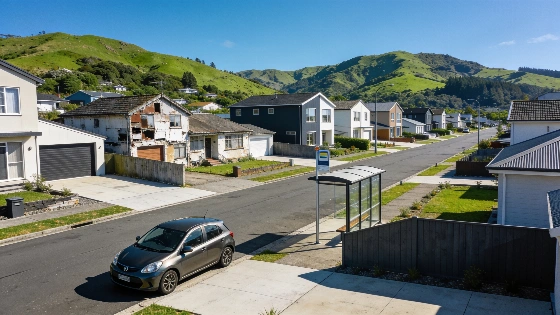
Housing remains hard to afford. House prices jumped 28% during the pandemic. Even after a small dip in 2022, prices are still high, making it tough for many to buy their first home. When buyers do find something in their price range, the quality can disappoint. Many homes need major renovation, and older buildings often lack proper insulation or heating. Population growth keeps pressure on housing and infrastructure: in the year to September 2026, Stats NZ estimated 136,100 migrant arrivals and 113,500 departures, for a net migration gain of 22,600. That’s up from 9,900 the year before. Migration made up 55% of the total population growth of 41,100, with the resident population reaching 5,372,400 by 30 September 2026.
Indoor Comfort and Regulatory Changes
Even with a mild climate, many New Zealand homes feel cold and damp in winter because of outdated building standards and poor insulation. Indoor temperatures often fall below what people expect, especially in older houses. The Labour Government’s Healthy Homes Standards have introduced new rules for insulation, heating and ventilation in rentals. These standards now require proper heating and a minimum temperature of eighteen degrees Celsius in living rooms.
While these issues are real, many still find New Zealand’s natural environment, space and lifestyle appealing. Knowing the practical details of daily life—from higher costs to housing quality and transport limits—matters for anyone planning a long-term move. For more on recent cost of living changes, see the latest Stats NZ migration and population updates.