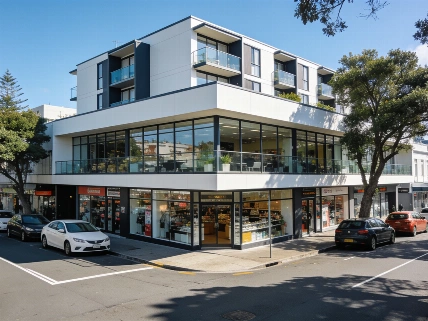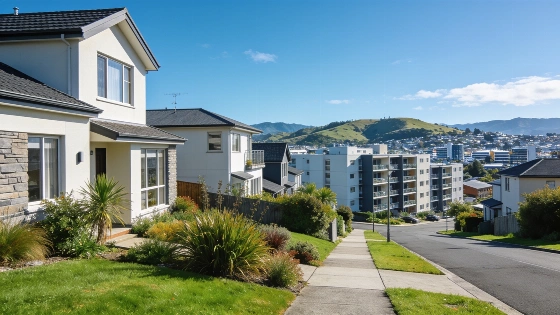
New Zealand renters saw a national median weekly rent of $590 for new bonds lodged in July 2026, according to Tenancy Services data. Rental costs shifted widely by location. Queenstown-Lakes posted the highest median at $800 per week, while Dunedin had the lowest among main centres at $520 per week. Auckland's median hit $640. Wellington City, Hamilton and Christchurch ranged from $550 to $560.
Within Auckland, rents often vary between suburbs. The Tenancy Services market rent database listed a median weekly rent of $600 in Avondale for 1 April to 30 September 2026, based on 2,505 new bonds. Avondale's lower and upper quartile rents were $495 and $700 per week, a $205 spread around the median. These numbers reflect current letting conditions in that suburb and period, showing that Auckland districts do not share a single price point.
For two-bedroom properties, the national median rent was $550 per week for bonds lodged between April and June 2026. Single rooms in shared flats cost less, with a median of $290 per week for the same period. These figures cover only new tenancies, so existing renters may pay different amounts depending on when their agreements started.
Regional and City Rent Comparisons
Median rents for July 2026 show the regional spread. Tauranga's median was $690. Hamilton and Wellington City both recorded $560. Christchurch was slightly lower at $550. The national median for all property types was $590 per week. In smaller or student-heavy markets, monthly medians can swing more due to fewer new bonds being lodged.
Across regions, Bay of Plenty reached $650, Auckland $640, and Gisborne $618. Hawke’s Bay and Tasman both reported $600. Southland and the West Coast were the most affordable at $500 and $435 respectively. Some regions, including Gisborne, Marlborough, Tasman, Nelson and the West Coast, had fewer than 130 new bonds in July 2026, making their medians more volatile.
Rent as a Share of Income
Affordability remains tough for many renters. In Auckland, a single person earning the minimum wage ($23.95 per hour, full-time) would spend about 81% of their take-home pay on the median rent. At the median wage, rent would take 57% of income. Couples with two median incomes would see rent drop to 28% of combined take-home pay. In Christchurch, the median rent of $550 per week meant 69% of a minimum wage earner’s income and 49% for someone on the median wage went to rent.
How Rents Have Changed Since 2020
Rents have climbed over the past six years. Queenstown-Lakes saw a 60% jump from $500 in July 2020 to $800 in July 2026. Hawke’s Bay and Christchurch both had 38% rises. Dunedin’s median went up 33%. Auckland’s median increased by 16% in the same period, and the national median rose by 26%.
Finding Cheaper Accommodation
Flatting is still the main way to cut housing costs. The median rent for a room in a shared flat was $290 per week, compared to $550 for a two-bedroom property. Comparing rents across suburbs can reveal big differences within the same city. In Avondale, Auckland, the median rent for the six months to September 2026 was $600 per week, with a lower quartile of $495 and an upper quartile of $700, based on 2,505 new bonds. This shows why checking local figures matters, as there can be a wide spread even within a single city. Regional centres such as Hamilton, Palmerston North and Whanganui offered median rents $80 to $120 below Auckland’s in July 2026. Tenancy Services provides a market rent tool for checking local figures over the previous six months.
Rent increases are limited to once every 12 months under the Residential Tenancies Act, with at least 60 days’ written notice required. For fixed-term tenancies, increases are only allowed if the agreement permits. Rent in advance is capped at two weeks, and the general bond cannot exceed four weeks’ rent. If a landlord agrees to a pet, a separate pet bond of up to two weeks’ rent may be charged, except for disability assist dogs. All bonds must be lodged with Tenancy Services.
Tenant Rights and Healthy Homes Standards
Tenants ending a periodic tenancy must give at least 21 days’ written notice. Landlords can give 90 days’ notice without a reason, or 42 days for specific reasons such as the owner moving in. The Healthy Homes Standards require rental properties to meet minimum requirements for heating, insulation, ventilation, moisture ingress and drainage, and draught stopping. Some properties may be exempt in certain situations, but new or renewed tenancy agreements must include a statement of compliance.
These figures and rules are based on Tenancy Services data and current legislation as of July 2026. For personalised advice, tenants and landlords should consult a qualified financial adviser or refer to official resources such as fma.govt.nz or sorted.org.nz.